-
February 2017 – Paul’s Newsletter
Greetings!
It’s late February and things are beginning to bloom all over. Azalea’s and Red Buds are looking like they will bust out all over any day now. The bees are foraging with a vengeance. I left my shop door open Sunday with some old dead-outs stacked up near the entrance and the bees found them. Hundreds, if not thousands of my girls were in my shop so thick there was no room for me. I turned off all the lights and covered the windows with tarps so that the only light they could see was the open door. That got most of them out, but I still had hundreds of dead bees on my shop floor yesterday and today. Note to self: don’t leave the shop door open again.
All of you missed a wonderful Georgia Beekeepers Association meeting in Griffin last weekend. I know all of you missed it because Jim Ellis and I were the only CVBA members there. You missed a great chance to learn from the professors and chat with fellow beekeepers. I encourage all of you to consider joining the GBA. It is well worth your time and money.
I finished inspecting the rest of my hives this past week (5 or 6 is all I can handle without a break). While inspecting, I did my hive body reversals and continued to treat with the oxalic/glycerin shop towels I wrote about earlier (credit Randy Oliver from California). I really like that method because it doesn’t seem to bother the bees at all. No sooner do I lay the moist towel over the brood than bees begin to crawl all over the towel. I had a few hives in which the bees had not moved up or were all scattered around the hive bodies (which I left alone), but most were all in the top brood box, which I reversed to give them room to continue moving up in the hive.
I found a few drone cells in a couple of my hives but I’m waiting now for warm sunny days to start at the beginning again, looking for drone and swarm cells. Do remember it takes a drone 24 days to hatch (from egg to bee) and an additional 10 days for him to sexually mature. It only takes a new queen 18 days to hatch (from egg to bee) and a few days after that to mature. It is NOT too early to look for swarm cells. Beekeepers in Savannah reported active swarms already and Jim Ellis told me Saturday he had already had a swarm call.
Finding swarm cells really is a gift if you have any desire to split some hives (which also serves as a swarm deterrent). When you find a swarm cell, locate the old queen and move her to a NUC box along with half the honey/pollen and brood, leaving the frame with the swarm cell(s) in the original hive along with half the honey/pollen and brood. Move that NUC with half the bees/honey/pollen/brood and the old queen 2 miles away. Fill up the old hive with frames and foundation and now you have two colonies of bees. After a few weeks when the new queen has hatched and mated, you can move your NUC back to your yard and put them into a full size hive. One hive is now two. Couldn’t be easier.
My hives were all full of honey and pollen, so I have stopped all feeding, but you need to make that determination for your own hives. Inspect. Try to lift them from behind. If they’re heavy, you’re probably good but better to pop the top and inspect. When I inspect my hives, I remove and inspect every frame in the top box, then move it aside and do the same with the bottom box. You should be doing this now.
If It seems light or if you do not see a good amount of food, keep feeding. From now until the honey flow begins in earnest around April 1st, your bees are in danger of starving. Two or three cold days or two or three rainy days and they can starve if they don’t have sufficient stores.
A quick word about pesticides. In our area of the state, we really don’t have heavy agriculture and that’s where the greatest danger from which pesticides come. Pesticides can be a problem, but we are not at great risk from agricultural spraying. Although I’ve read about and seen pictures of pesticide kills, I’ve never actually seen one in real life. If you spray pesticides for any reason or can influence a neighbor who does, make sure to spray late in the afternoon around dusk and never, ever spray blooms the bees visit during the day. Spray only after the blooms have dropped.
As I listen to lectures and attend classes at state meetings, I have noticed the “experts” are now spending a lot of time on Varroa and less and less time on Neonicotinoids (a pesticide infused in seeds). I’ve even seen a couple of studies that discount Neonics as a problem. A real turn-around from a few years ago when everything from Colony Collapse Disorder to Global Warming was being blamed on neonics. The jury is still out, I guess.
INSPECT YOUR HIVES! TREAT FOR VARROA! FEED WHEN NECESSARY!
– Paul Berry, member CVBA -
Beekeeping Spring Course Outline -2017
The fee for this course is $100. This covers classroom materials, text book, a one year membership in the CVBA and the six classes. Instructors will guide participants to sources for tools, equipment, protective clothing and honeybees, none of which are included in the fee. Immediate family members wishing to take the classes with a fully paid participant, can pay a $50 fee but materials are not included (share). If someone wants to take just one or two classes, the fee is $25 each class.
To register for The Spring Beekeeping Class, please call Oxbow’s front desk at 706-507-8550 and ask to register for the Spring Beekeepers Program. Payment can be accepted over the phone.
Dates for the 2017 Spring Course:
Class 1: February 25th, 2017
3PM – 5PM at Oxbow Meadows Auditorium
Registration, introductions and general discussion on honeybees and beekeeping, all designed to answer the question, “Is beekeeping right for me?”. Distribution of textbook, catalogs and other materials. Overview of equipment needed by participants and how to order. Woodenware must be ordered soon after this meeting.
Class 2: March 4th, 2017
3PM – 5PM at Oxbow Meadows Auditorium
Discussion of honeybees, types of bees, life cycle, hive locations. Further discussions on the use of woodenware, protective clothing and other tools necessary for the beekeeper.
Class 3: March 11th, 2017
3PM – 5PM at Oxbow Meadows Auditorium and Garage area
Hands on assembly of hive components. Demonstrate and assist participants in the assembly of their equipment.
Class 4: March 18th, 2017
3PM – 5PM at Oxbow Meadows Auditorium and Beeyard
How to don protective clothing. Lighting a smoker. Use of various tools. Discussions on package installation and NUC installation. Demonstration of an actual hive inspection.
Class 5: March 25th, 2017
3PM – 5PM at Oxbow Meadows Auditorium and Beeyard
Hands on hive inspections by instructors and participants. Overview of the extraction process. Demonstration of the extraction equipment. Discussion of next sessions events and what participants need to bring.
Class 6: April 1st, 2017
3PM – 5PM at Oxbow Meadows Garage area and Beeyard
Final formal class. Demonstrate the installation of a package of bees and the installation of a NUC with live bees if available and possible. Assist participants with their installations.
Beekeeping education is ongoing and we recommend joining the CVBA as we provide educational programs throughout the year. Joining is easy. You can view the membership application HERE.
Insectival Honey Extraction at Oxbow Meadows – free admission for those taking this class.
IMPORTANT NOTE:
The fee for this six-week course is $100. This covers classroom materials, text book, a one year membership in the CVBA and the six classes. Instructors will guide participants to sources for tools, equipment, protective clothing and honeybees, none of which are included in the fee. Immediate family members wishing to take the classes with a fully paid participant, can pay a $50 fee but materials are not included (share). If someone wants to take just one or two classes, the fee is $25 each class.
-
January 2017 – Paul’s Newsletter
Paul’s Newsletter
Today is the middle of January. January 16 to be exact. So what should you be thinking about in regard to your bees? This time of year, you should be thinking about the health of your hives and what are you going to do when the bees begin to swarm around March 1st.
To prepare for certain events, it usually helps to count backwards. For example, if you want to know when to begin swarm prevention (such as it is), you should know that is takes a new queen 18 days to hatch. Counting backwards, you know the hive can swarm around March 1, so that new queen must have been laid around the middle of February, say, for ease of calculating, February 15. By February 15, the hive has already committed to swarm with the construction of queen cells. Once the hive commits, there’s not much you can do to discourage it.
Therefore, if you wish to “discourage” the hive from swarming, you should probably do your hive body reversals around the first of February on a warm, sunny day. Get the idea?
Let’s say you want to do some hive increases. Well, you could let them swarm and hope you can recover the swarm (i.e. one hive becomes two). Instead of taking the risk, you could initiate an “artificial” swarm. That’s a process we call “splitting” the hive. You open the hive and look for swarm cells. When you find one, take the existing queen from that hive, pull out 5 frames of bees (being sure NOT to take the frame with the queen cell on it), put them and the old queen into a NUC box and move it 2 miles or more away from the mother hive. Add 5 frames of foundation to the mother hive and the new queen will hatch, take over the mother hive and give you two hives from one. After a couple of weeks, you can bring the NUC back home and treat it just like you would a NUC you bought.
So when do we go into the hives to look for queen cells? After February 15. Actually, you can find queen cells anytime after February 15, all the way up to late August.
So that’s for February, what do we need to do NOW?
Your bees can die from a number of things, but for the most part, you will lose your hives for one of two reasons: Starvation or Varroa (mites). Starvation is the saddest because you will open your hive and find all your bees with their heads down in the empty honey cells, dead. They were licking the last of the honey from the cells. Lots of dead bees on your bottom board. Sad because it’s highly preventable. CHECK YOUR HIVES FOR FOOD STORES NOW. Also check them every week or so because now is the time bees can easily starve. Feed them with a 1 – 1 sugar syrup mixture if the hive seems light (I begin feeding all my hives on January 1st regardless).
I get phone calls all the time from beekeepers who have lost a hive or hives. I had a call last week from a beekeeper who lost 4 out of 6 hives practically overnight. Hives were full of honey but no bees and no brood. Obviously he discovered his dilemma before the other bees had a chance to rob all that honey. Wait a few more days and the hives would have had no honey, no brood and no bees. The answer is Varroa. My first question is always, did you treat for varroa? And the answer is usually “no”. The fact is, you must treat for Varroa. There’s no alternative. Want to keep your bees alive? Then you MUST treat.
My pattern of treatment is: Apivar in the fall after honey harvest, oxalic acid in the late winter/early spring (now) and Mite Away Quick Strips in the spring. Of the three, only MAQS can be used when honey supers are on the hive. Apivar and MAQS are pretty self explanatory. The directions are on the package (follow them to the letter).
Oxalic acid can be used in a number of ways, however only three methods have been approved for use in the USA. Some states have not yet approved it but Georgia and Alabama have. Those three methods of treatment are: vaporization (sublimation), spray and dribble. ANYTHING OTHER THAN THOSE THREE METHODS HAVE NOT BEEN APPROVED, and I would never encourage anyone to violate EPA rules.
There is, however, extensive work being done all over the world and one method, being tested by Randy Oliver in California interests me. He describes it in this month’s issue of American Bee Journal magazine. I’ll try to summarize it.
He takes common blue shop towels (similar to regular paper towels on a roll) and dips one towel in a solution of oxalic acid mixed with food grade glycerin, squeezes it out, then places that towel on top of the frames of the lower brood body. It takes the bees 4 to 6 weeks to chew up the towel and throw it out the front door. The timing is perfect to expose 3 generations of bees to the OA, thus getting the vast majority of the Varroa.
“Don’t try this at home”. Here’s the formula he uses. For each towel (1 per hive) measure 25 ml of food grade glycerin and heat it to the temperature of hot coffee (do not boil), weigh out 25 grams of oxalic acid, stir it into the hot glycerin until it fully dissolves (you can reheat, but don’t boil). This is enough for one towel, so multiply quantities for additional hives. Soak the towel in the warm solution to saturate it. Put it into a tray with a catch drain and squeeze or press until you have recovered about half the solution. It will be blue, but can still be used. The final squeezed towel will hold about 25 g of solution and will weigh about 31 g. He places this towel on top of the frames of the lower brood box in a double brood body hive.
You MUST USE NITRILE GLOVES. Avoid contact with bare skin. It is Acid. It will burn you. It washes off easily on warm water and can be neutralized with baking soda dissolved in water. The OA/Gly solution will stick to your fingers and to anything and everything you touch, so don’t.
Final cautions. It is illegal to use oxalic acid in any way not approved by the EPA and the individual states. It’s also illegal to use any Oxalic Acid that does not have the EPA label on it, even though it’s identical to common wood bleach you can find in any paint or hardware store for a fraction of the cost. Also it is worthy of being repeated: always use nitrile gloves when handling Oxalic Acid. Don’t touch it and don’t breathe it.
Last caution. If you don’t treat you hives for Varroa, they will die. Maybe not this year, but next for sure. Feed, Feed, Feed. And Treat, Treat, Treat.
Paul Berry
-
Gavel Passed at Christmas Party 2016
 The CVBA held its annual Christmas social on December 12th, 2016. The meeting/social was held at the GA extension meeting room in Columbus, GA. The turnout was great for this event and mother nature provided beautifully mild temperatures. This was truly an enjoyable night with good fellowship and delicious food. Here is a photo as the food started rolling in. By the time we were ready to eat, the amount of food was phenomenal and the entire dinner delicious.

Jim Harris
Two important events were forefront at the meeting. First was the celebration of Jim Harris’s 90th birthday! Jim is a longtime member and important mentor to many, many beekeepers. His beekeeping knowledge has always been freely shared and the CVBA has been blessed with his participation in the club. Jim holds Emeritus status and is a permanent member on the board of directors. The club recognizes this extensive contribution in promoting beekeeping and is joyful to celebrate his 90th birthday with him and his son, George. We look forward to many more years together.

Jim Harris and Betty Beegle
Jim is not the oldest member, however. Here is a picture of Jim Harris and Betty Beegle. Both are active members and have both celebrated their 90th birthdays this year. Betty’s birthday was in June, and Jim’s in December. Congratulations to you both!
The second event at the meeting was the change in leadership. The president position has been passed from Paul Berry to Jim Ellis. The club has really grown while Paul has held office and everyone thanks him for his service and terrific job during these past several years. Paul will continue to be an active member in our club. Both Paul and Jim have a great amount of beekeeping knowledge and a desire to promote beekeeping in the Chattahoochee Valley area. Jim has held the presidency before and has graciously accepted the challenge again. We look forward to this new year and new leadership.

Paul Berry, immediate past-president and Jim Ellis, president
Here is a photo of Paul Berry and Jim Ellis at our Christmas Social. Congratulations and thank you for serving the beekeepers of the Chattahoochee Valley.
Merry Christmas and Happy New Year to all of our beekeeping friends – both current and future! See you in January at our next meeting, January 9th, 2017 at the GA extension office and, looking ahead, at our Spring beekeeping course, which begins in February. This comprehensive and hands-on course will take place on six consecutive Saturdays at OXBOW MEADOWS. Saturday February 25 thru April 1, 2017. You can read more about this course HERE.
If you would like to join our group, you can print out an application HERE.
HELP! Swarms & Bee Rescue
Announcements
Recent Posts
- February 2017 – Paul’s Newsletter
- Beekeeping Spring Course Outline -2017
- January 2017 – Paul’s Newsletter
- Gavel Passed at Christmas Party 2016
- Beekeeping Course 2017 Announced
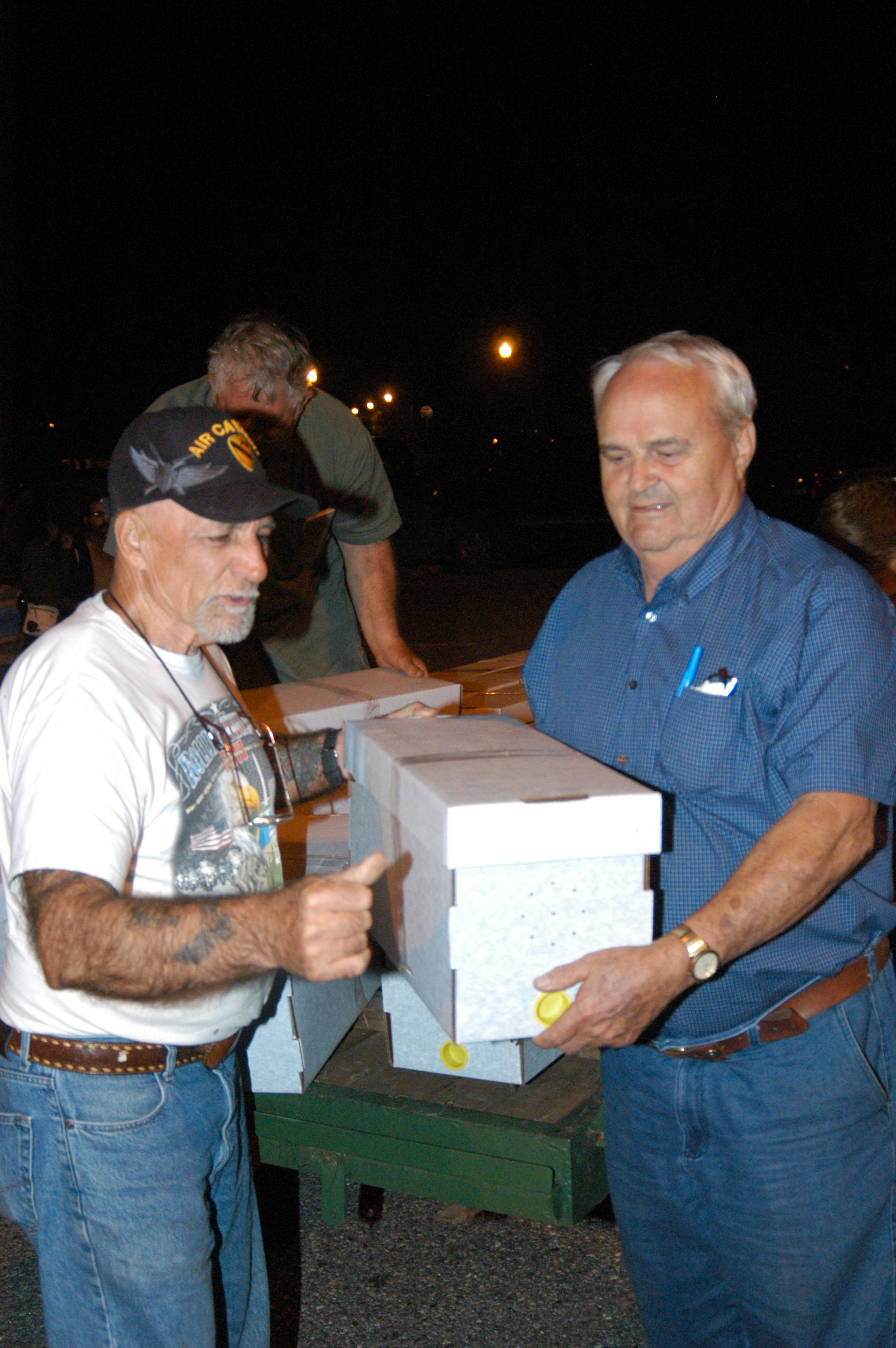
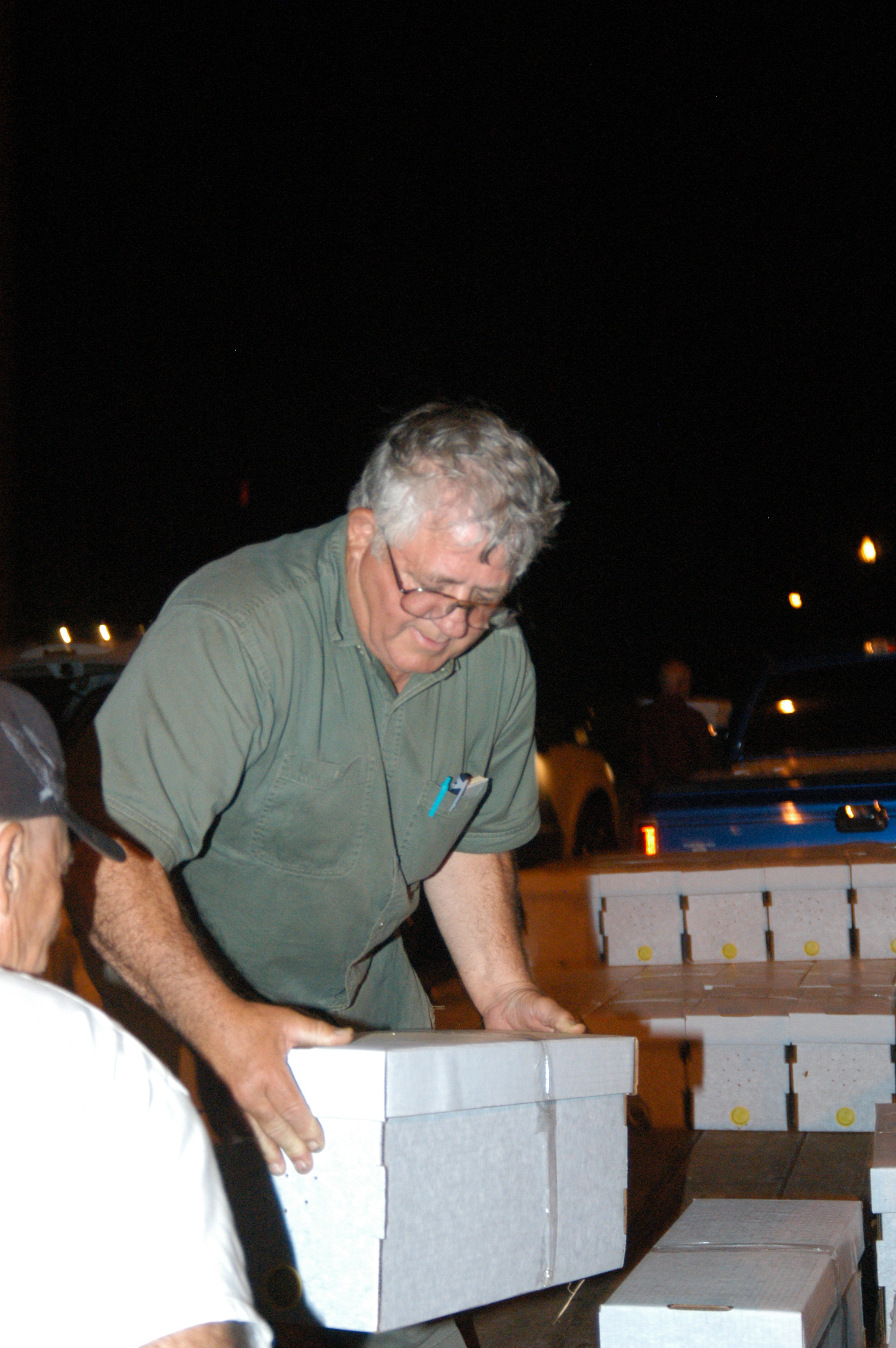
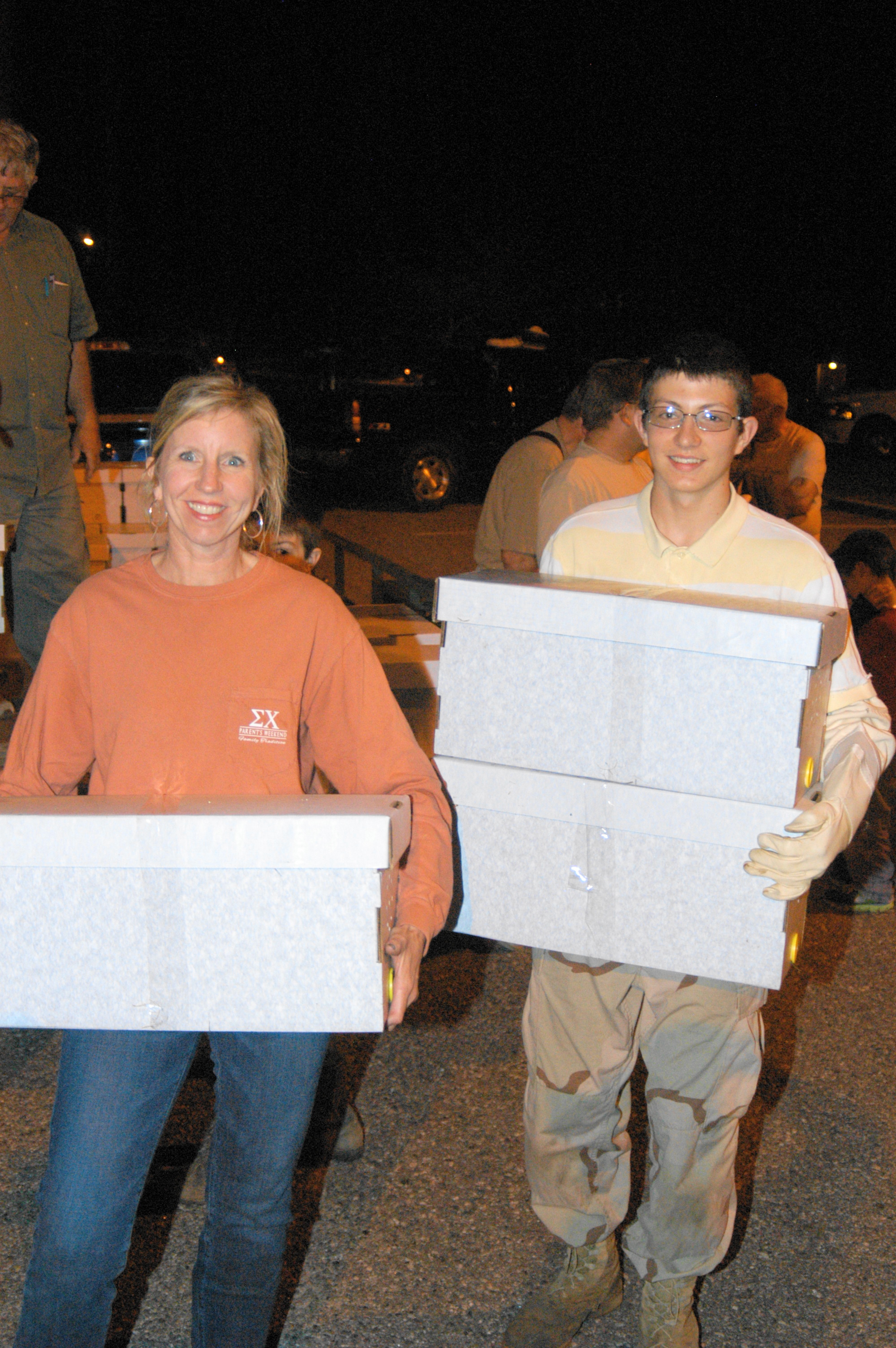
Nucs Arrive 2015
Varroa Mite Test
Helpful Links
Archives
- March 2017
- January 2017
- December 2016
- October 2016
- September 2016
- August 2016
- June 2016
- May 2016
- April 2016
- December 2015
- October 2015
- August 2015
- July 2015
- June 2015
- April 2015
- March 2015
- February 2015
- December 2014
- October 2014
- September 2014
- August 2014
- July 2014
- June 2014
- March 2014
- January 2014
- September 2013
- August 2013
- July 2013
- June 2013
- April 2013
- March 2013
- January 2013
- November 2012
- August 2012
- July 2012
- June 2012
- May 2012
- April 2012
- March 2012


